.png)
Sickle Cell Gene Therapy vs Other Treatments: A Simple Comparison

Sickle cell disease can be a tough condition to deal with, and finding the right treatment is a big deal. For a long time, options were limited, but now we've got some really new stuff like gene therapy. It's a lot to take in, so let's break down how gene therapy stacks up against the older ways of treating sickle cell, keeping things simple.
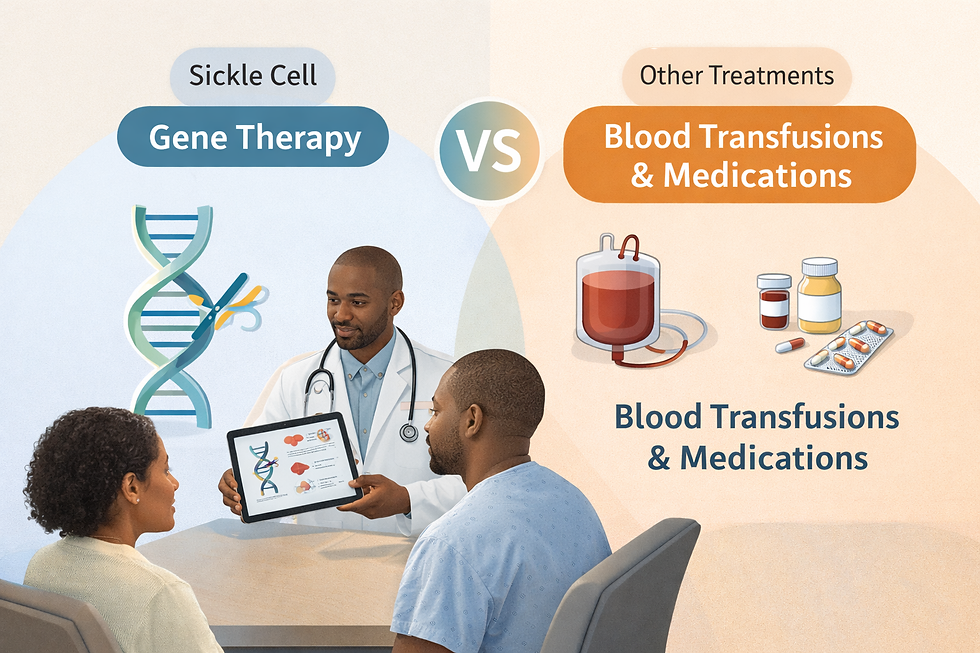
Key Takeaways
Gene therapy offers a potentially curative approach for sickle cell disease, unlike many traditional treatments that manage symptoms.
Traditional treatments like hydroxyurea help manage symptoms but don't fix the underlying genetic issue.
Bone marrow transplants can be curative but face challenges with donor matching and transplant-related risks.
New gene therapies work by either reactivating fetal hemoglobin or introducing healthy hemoglobin genes, often using the patient's own cells.
While promising, gene therapy comes with significant costs, requires specialized centers, and needs long-term monitoring, similar to bone marrow transplants.
Understanding Sickle Cell Disease Treatments
What is Sickle Cell Disease?
Sickle cell disease, or SCD, is a condition that affects your red blood cells. Normally, red blood cells are round and flexible, like tiny donuts, and they move easily through your blood vessels to deliver oxygen all over your body. But in sickle cell disease, some of these red blood cells are shaped like a sickle, or a crescent moon. These sickle-shaped cells are stiff and can get stuck in blood vessels, blocking blood flow. This blockage can cause a lot of pain, and over time, it can damage organs like the spleen, kidneys, and brain. It's a genetic condition, meaning it's something you're born with, and it's most common in people of African descent.
The Evolution of Sickle Cell Treatment Options
For a long time, the main way to manage sickle cell disease was with medications like hydroxyurea. This drug helps increase fetal hemoglobin, a type of hemoglobin that doesn't sickle. It can help reduce pain crises and other complications. More recently, other drugs have been approved, like L-glutamine, voxelotor, and crizanlizumab, each working in different ways to help manage symptoms or prevent complications. These treatments are important for managing the disease day-to-day, but they don't actually cure sickle cell disease. The only treatment that could offer a cure for many years was a bone marrow transplant, also known as a hematopoietic stem cell transplant (HSCT). This involves replacing the patient's bone marrow with healthy marrow from a donor. However, finding a matching donor can be very difficult, and the transplant process itself has significant risks. The development of gene therapy marks a significant shift, offering a potential one-time cure by addressing the root genetic cause of the disease.
Here's a look at how treatments have evolved:
Early Management: Focused on managing pain and preventing infections.
Medications: Introduction of hydroxyurea, followed by newer drugs to improve symptoms and reduce complications.
Cell-Based Therapies: Bone marrow transplant as the first potential cure, though with significant challenges.
Gene Therapy: A newer approach aiming for a one-time cure by correcting the underlying genetic issue.
The journey of treating sickle cell disease has been one of steady progress. While older treatments helped manage symptoms and improve quality of life, they didn't offer a way to eliminate the disease entirely. The goal has always been to find a way to stop the sickling of red blood cells permanently. This has led to the exploration of various approaches, from managing the effects of the disease to trying to fix the cause itself.
Gene Therapy vs Other Treatments Explained Simply
Gene Therapy: A New Frontier
Think of gene therapy as a way to fix the root cause of sickle cell disease, rather than just managing the symptoms. It's a newer approach that aims to make a lasting change inside your body. Instead of relying on medications to help with pain crises or transfusions to bring in healthy red blood cells, gene therapy tries to get your own body to produce healthy cells from the start. It's like giving your body a new set of instructions to build better red blood cells. This is a big shift from how we've traditionally approached sickle cell.
Traditional Treatments and Their Limitations
For a long time, sickle cell disease treatment has focused on managing the problems it causes. This often means dealing with pain crises, preventing infections, and sometimes needing blood transfusions. While these methods can help people live longer and feel better, they don't actually fix the underlying issue with the red blood cells. It's a bit like constantly patching up a leaky roof instead of replacing the whole thing. These treatments can also be a lifelong commitment, requiring regular doctor visits and hospital stays.
Pain Management: Medications to help with severe pain during crises.
Infection Prevention: Antibiotics and vaccines to ward off infections, which can be very dangerous for people with sickle cell.
Blood Transfusions: Receiving healthy red blood cells to temporarily improve anemia and reduce complications.
Hydroxyurea: A medication that can help reduce the frequency of pain crises and the need for transfusions.
While these traditional methods have been lifelines for many, they often manage symptoms rather than offering a cure. The goal of gene therapy is to move beyond management towards a potential one-time fix.
Comparing Curative Potential
When we talk about sickle cell treatments, the idea of a 'cure' is a big one. Traditional treatments, as we've discussed, are more about managing the disease and its effects over a lifetime. They can significantly improve quality of life, but they don't eliminate sickle cell disease itself. Gene therapy, on the other hand, is being developed with the hope of being a curative treatment. It aims to correct the genetic problem that causes sickle cell disease, potentially offering a one-time solution that could last a lifetime. This is a major difference in the long-term outlook for patients. It's important to remember that gene therapy is still relatively new, and while promising, it's not a guaranteed cure for everyone, and long-term effects are still being studied. The first gene editing therapy for sickle cell was approved recently, marking a significant step forward in sickle cell treatment options.
How Gene Therapies Work
Activating Fetal Hemoglobin Production
Think about when babies are born. They have a type of hemoglobin called fetal hemoglobin (HbF). This type works really well at carrying oxygen, even when there's not much of it around. After birth, our bodies usually switch to making adult hemoglobin. In sickle cell disease, the adult hemoglobin (HbS) is the one that causes red blood cells to become stiff and sickle-shaped. Some gene therapies aim to turn back the clock, so to speak. They work by reactivating the genes that make fetal hemoglobin. If we can get the body to produce enough HbF alongside or instead of HbS, it can prevent those sickled cells from forming. This is like giving the red blood cells a backup system that doesn't cause problems.
Introducing Healthy Hemoglobin Genes
Another way gene therapy can help is by giving the body a new set of instructions to make healthy hemoglobin. This is often done by using a harmless virus, like a delivery truck, to carry a working copy of the gene for normal adult hemoglobin into the patient's own blood stem cells. These stem cells are the ones that create all blood cells, including red blood cells. Once the stem cells have the new gene, they can start making red blood cells with normal hemoglobin. These normal red blood cells don't sickle, and they can carry oxygen effectively. It's like replacing the faulty blueprint with a correct one so the factory can build the right product.
The Role of Gene Editing Technologies
Gene editing is a bit like having a very precise pair of scissors and glue for DNA. It's a more advanced type of gene therapy. Instead of just adding a new gene, gene editing tools can go into the DNA and make specific changes. For sickle cell disease, this could mean:
Correcting the sickle cell gene: The tools can find the exact spot in the DNA that causes the problem and fix it, so the body makes normal hemoglobin.
Turning off the sickle cell gene: The editing tools can be used to silence the faulty gene, preventing it from making the problematic hemoglobin.
Activating other helpful genes: Similar to the first method, gene editing can be used to turn on genes that produce beneficial hemoglobin, like fetal hemoglobin.
The goal is to make a lasting change directly in the patient's own cells. This approach is still quite new, and scientists are working hard to make it as safe and effective as possible. It's a powerful tool that offers a different way to tackle the root cause of the disease at the genetic level.
The Treatment Journey: Gene Therapy Compared
Process and Timeline for Gene Therapies
Getting gene therapy is a pretty involved process, not like taking a pill. It usually starts with a thorough check-up to see if it's the right fit for you. If it is, the next step often involves collecting your own cells. These cells are then sent to a lab where the gene editing or therapy happens. This can take some time, maybe weeks. After the cells are ready, you'll likely need some treatment, like chemotherapy, to prepare your body to receive the modified cells. Finally, the edited cells are given back to you. The whole thing, from start to finish, can take several months. It's a marathon, not a sprint, and requires a lot of patience.
Comparison to Bone Marrow Transplant Procedures
Gene therapy and bone marrow transplants (also called stem cell transplants) are often compared because they both aim to fix the underlying problem in sickle cell disease. A bone marrow transplant replaces your diseased bone marrow with healthy marrow from a donor. This is a well-established treatment, but it has its own set of challenges. Finding a matching donor can be difficult, and there's a risk of graft-versus-host disease, where the donor cells attack your body. Gene therapy, on the other hand, aims to use your own cells, which can avoid some of those donor-related issues. However, gene therapy is newer, and we're still learning about its long-term effects.
Here's a quick look at some differences:
Feature | Gene Therapy (Ex Vivo) | Bone Marrow Transplant (Allogeneic) |
|---|---|---|
Cell Source | Patient's own cells | Donor's cells |
Donor Match | Not required | Required (sibling or unrelated donor) |
Graft vs. Host | Not a concern | Significant risk |
Treatment Time | Months (collection, lab work, infusion) | Months to a year (conditioning, transplant, recovery) |
Newness | Relatively new, first approvals in late 2023/early 2024 | Established treatment |
Post-Treatment Care and Recovery
After receiving gene therapy, the recovery period is quite important. You'll need regular check-ups to make sure the therapy is working and to watch for any side effects. Your immune system might be weaker for a while, so you'll need to take precautions to avoid infections. Doctors will monitor your blood counts and overall health closely. Recovery isn't just about the physical side of things; it's also about getting back to your daily life. This can take time, and having a good support system in place makes a big difference.
The journey through gene therapy involves careful preparation, the treatment itself, and a significant recovery period. It requires close collaboration with your medical team and a strong support network to manage the process effectively.
Candidate Selection and Considerations
Assessing Eligibility for Gene Therapy
Deciding if gene therapy is the right path for someone with sickle cell disease isn't a one-size-fits-all situation. Doctors look at a lot of things to figure this out. For starters, the current gene therapies are approved for specific genetic types of sickle cell disease. This means if you have certain variations, like sickle cell SC disease, you might not be eligible right now. It's also important to consider your overall health. If there's significant damage to organs like the kidneys or liver, gene therapy might not be recommended because the treatment process itself can be tough on the body, and it can't undo existing damage. Plus, there are age restrictions; currently, these therapies are approved for individuals 12 years and older. It's a complex puzzle, and talking with your hematologist is the first step to see if you fit the criteria for gene therapy for sickle cell disease.
Factors Influencing Treatment Decisions
When thinking about any treatment for sickle cell, especially something as new as gene therapy, doctors consider many factors. It's not just about the disease itself, but also about the person receiving the treatment. They'll look at how well your organs are working to make sure you can handle the process, which often involves chemotherapy before the gene therapy is given. They also consider how severe your sickle cell disease has been. If someone has had very severe complications, the risks of the treatment might outweigh the potential benefits. It's a careful balancing act.
Organ Function: How well are your kidneys, liver, heart, and lungs working?
Disease Severity: Have you had many pain crises, organ damage, or other serious complications?
Age: Are you within the approved age range for the therapy?
Genetic Type: Does your specific type of sickle cell disease match what the therapy is approved for?
The Importance of Support Systems
Beyond the medical checklist, there's a really human side to choosing a treatment like gene therapy. It's a long process, often taking a year or more from start to finish. This means a lot of appointments, potential side effects to manage, and emotional ups and downs. Having a strong support system makes a huge difference. This could be family, friends, or even support groups. These people can help with practical things like getting to appointments, and they offer emotional encouragement when things get tough.
The journey with sickle cell treatment, especially with newer options, requires not just medical attention but also a network of people who can offer practical help and emotional strength. This support is key to navigating the challenges and celebrating the successes along the way.
It's also worth remembering that even if someone isn't a candidate right now, the science is moving fast. What might not be possible today could be an option in the future. So, staying informed and talking with your doctor about all the possibilities is always a good idea.
Effectiveness and Safety Profiles
Clinical Trial Outcomes for Gene Therapies
When we talk about gene therapy for sickle cell disease, it's important to remember that many of these treatments are still being studied. Clinical trials are where researchers carefully test new therapies to see if they work and if they are safe. The results so far have been really promising for some people. Many participants in trials have seen a big drop in the painful crises that sickle cell causes. Some have even stopped needing blood transfusions altogether. It's a complex process, and not everyone responds the same way, but the early signs suggest gene therapy could offer a significant improvement for many.
Potential Side Effects and Risks
Like any medical treatment, gene therapy isn't without its potential downsides. Because it involves making changes to your body's cells, there are risks to consider. One concern is how your body might react to the delivery system used to get the new genetic material into your cells, like viral vectors or tiny fat particles called nanoparticles. Sometimes, the body's immune system can react to these, causing inflammation or other issues. There's also a small chance that the gene editing process might accidentally change other parts of your DNA, which could lead to unexpected problems down the road. Researchers are working hard to make these therapies as safe as possible by understanding and minimizing these risks.
Long-Term Monitoring and Unknowns
Since gene therapy is relatively new, especially for sickle cell disease, we don't have decades of data on what happens years later. This means that long-term monitoring is a really big part of the treatment plan. Doctors will want to keep a close eye on patients who have had gene therapy to catch any potential issues early. It's a bit like watching a new plant grow; you need to check on it regularly to make sure it's thriving. The goal is to understand the full picture of how these therapies affect people over their lifetime. This ongoing observation helps us learn more and improve treatments for the future. It's a journey of discovery, and staying informed is key. You can find more information about gene therapy's potential here.
Navigating the Costs and Accessibility
The High Cost of Gene Therapies
Gene therapy for sickle cell disease is a really new thing, and because of that, it comes with a big price tag. Think about it like buying the very first model of a brand-new car – it's expensive because it's cutting-edge. Right now, these treatments can cost millions of dollars. This isn't just for the therapy itself, but also covers all the work that goes into preparing you, the actual treatment, and the close watching you'll need afterward. It's a lot to take in, and it's understandable to feel overwhelmed by the numbers.
Insurance Coverage and Financial Planning
So, how do people actually pay for this? That's where insurance and financial planning come in. Many insurance plans are still figuring out how to cover these new, expensive treatments. It often takes a lot of paperwork and talking with your insurance company to see what's covered and what isn't. Sometimes, there are patient assistance programs offered by the companies that make the therapy, or even by non-profit groups, that can help lower the out-of-pocket costs. It's a good idea to talk to a financial counselor or someone at the treatment center who specializes in this. They can help you understand your options and figure out a plan that works for your situation.
Accessibility at Specialized Centers
Another piece of the puzzle is where you can even get this treatment. Gene therapy for sickle cell disease isn't available everywhere. You usually have to go to special medical centers that have the right equipment and doctors trained in these advanced therapies. This means that for some people, getting to a center might involve travel, finding a place to stay, and taking time off work or away from family. It adds another layer of planning and can be a challenge, especially if you live far from one of these specialized hospitals. Making sure everyone who could benefit has a fair shot at getting this treatment is something doctors and policymakers are working on.
Making sense of the costs and how to get help can feel like a lot. We know that figuring out the price of treatments and finding the right support can be confusing. That's why we're here to help guide you through it all. Visit our website to learn more about how we can assist your family.
Wrapping Things Up
So, we've looked at gene therapy and some other ways to manage sickle cell. It's clear that gene therapy is a big step forward, offering a potential cure that wasn't really there before, aside from bone marrow transplants which have their own hurdles. While other treatments like hydroxyurea have been around and help manage symptoms, they don't fix the root cause. Gene therapy, though still new and complex, aims to do just that. It's not a simple fix, taking time and requiring specialized care, and the cost is a major question mark right now. But the science is moving fast, and what might not be an option today could be in a few years. It’s always best to talk with your doctor about what makes the most sense for you, because there are more treatments on the horizon.
Frequently Asked Questions
What exactly is sickle cell disease?
Sickle cell disease is a condition you're born with that affects your red blood cells. Normally, red blood cells are round and move easily through your body to carry oxygen. But with sickle cell disease, some red blood cells are shaped like a sickle, or a crescent moon. These sickle-shaped cells can get stuck and block blood flow, causing pain and other serious problems.
How is gene therapy different from older treatments for sickle cell disease?
Older treatments often focused on managing symptoms or replacing bone marrow. Gene therapy is a newer approach that aims to fix the root cause of the disease by changing the body's own cells. It's like giving your body instructions to make healthy red blood cells, potentially offering a long-term solution or even a cure.
What are the main goals of sickle cell gene therapy?
The main goal is to stop the sickling of red blood cells. Gene therapies work in a couple of ways: some help turn on a gene that makes fetal hemoglobin (a type of hemoglobin found in babies that doesn't sickle), while others add a healthy gene to make normal hemoglobin. The idea is to reduce or eliminate the painful sickle cell crises and prevent organ damage.
Is gene therapy a one-time treatment?
The goal of current gene therapies for sickle cell disease is to be a one-time treatment. However, it's a complex process that involves preparing your body with chemotherapy and then receiving the modified cells. Doctors will need to monitor patients for a long time to be sure the treatment is working and to understand its long-term effects.
Who can get gene therapy for sickle cell disease?
Not everyone with sickle cell disease is a candidate for gene therapy right now. Doctors look at many things, like your overall health, how well your organs are working, and if you can handle the chemotherapy needed for the treatment. It's a big decision that requires talking with specialists.
What are the challenges with gene therapy, like cost and access?
Gene therapy is very new and currently very expensive, costing millions of dollars per patient. This makes it hard for many people to access. It's also only available at special medical centers with advanced equipment and expert teams. Figuring out insurance coverage and how to make it available to more people is a major challenge.


Comments